
How to Build a Trustworthy E-Commerce Brand in 2026 (Complete Guide)
Published on 3 September 2026 · by MAR Zihad
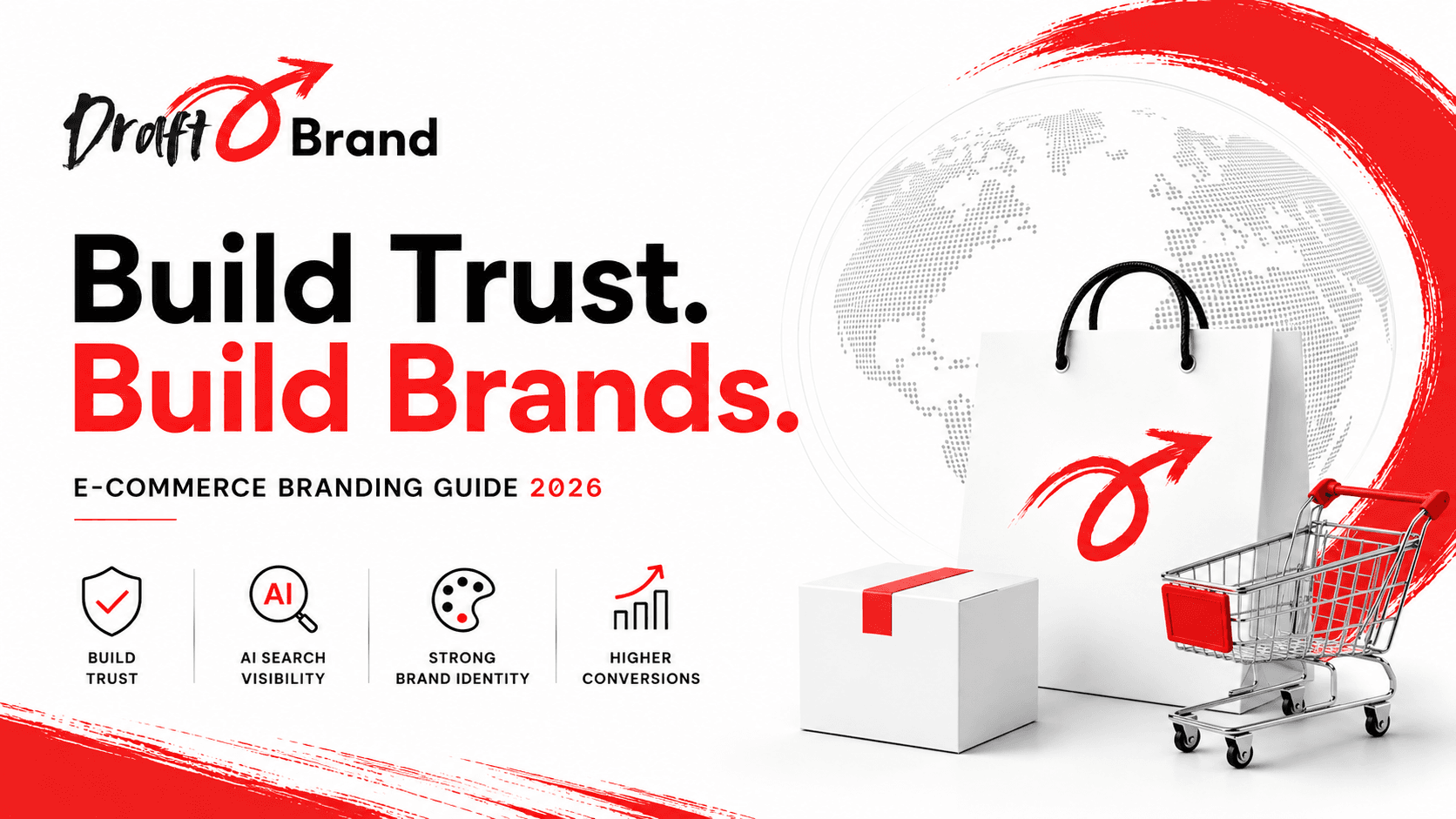
How to Build a Trustworthy E-Commerce Brand in 2026: A Complete Guide for Global Online Stores
Global e-commerce sales crossed $7.5 trillion in 2025, yet a large share of online stores still struggle to grow past their first few thousand customers. The product is often fine. The ads are often fine. What's usually missing is a brand — something a shopper recognizes, trusts, and comes back to without needing another discount code.
This guide breaks down exactly what e-commerce branding means in 2026, why it matters more now than it did even two years ago, and how to build one step by step — whether you're running a Shopify store, a WooCommerce shop, or a multi-marketplace operation.
Why E-Commerce Branding Matters More Than Ever in 2026
Three shifts have changed the game for online stores this year:
1. AI is now part of the shopping journey. A growing share of product discovery happens through AI assistants and AI-powered search summaries instead of a traditional list of blue links. When an AI answer recommends a product or a brand, it's pulling from signals of trust, consistency, and clear expertise — not just keyword density.
2. Shoppers are more skeptical of AI-generated content and ads. Most online shoppers say they're concerned about AI misuse in shopping experiences. That skepticism raises the value of a brand that feels real, consistent, and human across every touchpoint.
3. Paid ad costs keep climbing. Retail media and marketplace advertising costs are rising year over year. When every click costs more, a store that converts on brand trust — rather than needing to re-earn attention with a new discount every time — has a real cost advantage.
The takeaway: branding isn't decoration anymore. It's a direct lever on cost-per-acquisition, repeat purchase rate, and how visible you are inside AI-driven search.
The Core Elements of a Strong E-Commerce Brand
1. A Clearly Defined Target Audience
Before any logo or color palette, you need a precise picture of who you're selling to. Vague targeting ("women aged 18–45") produces vague branding. Effective e-commerce brands define their audience by:
- Specific problems the customer is trying to solve
- Where they currently shop and why they'd switch
- What kind of tone they respond to (playful, premium, no-nonsense, expert)
This research directly shapes your visual identity, product photography style, and even your pricing psychology.
2. Visual Identity and Consistency
Consistent visual branding across a website, product packaging, social channels, and ads has been shown to meaningfully increase how trustworthy a store appears to shoppers. This includes:
- A logo system that works at small sizes (favicon, app icon) and large sizes (banners)
- A locked color palette and typography system — documented, not improvised per page
- Consistent product photography style across every listing
Inconsistency is one of the fastest ways to make an otherwise good store feel unreliable.
3. A Distinct Brand Voice
Your brand voice is how you sound in product descriptions, email subject lines, customer support replies, and social captions. A useful test: if you removed your logo, would a regular customer still recognize the writing as yours? If not, the voice isn't distinct enough yet.
4. Brand Guidelines Documentation
Even a solo founder benefits from writing this down. A simple one-page brand guide — logo usage, color codes, tone-of-voice examples, do's and don'ts — keeps every freelancer, VA, or new hire on-brand from day one instead of guessing.
How to Build Trust With AI-Driven Shoppers (Answer Engine Optimization)
Search behavior has genuinely changed. People increasingly ask an AI assistant a full question — "what's the best eco-friendly water bottle for hiking" — instead of typing three keywords into Google. To show up in those answers, e-commerce brands need to think beyond traditional SEO and toward Answer Engine Optimization (AEO).
Practical steps that help:
- Write content that directly answers real questions. Structure product pages, guides, and blog posts around the actual questions customers ask, using clear headers phrased as questions.
- Add structured data (schema markup). Product schema, FAQ schema, and review schema help AI systems and search engines understand exactly what your page is about and how trustworthy your listings are.
- Demonstrate real expertise (E-E-A-T). Author bios, real customer photos, original research, and detailed "how it's made" content signal genuine experience — something AI systems are increasingly trained to weigh over thin, keyword-stuffed pages.
- Keep answers concise near the top of the page, then expand with depth below. AI systems tend to favor content that gives a clear, direct answer first.
- Optimize for voice and conversational search by using natural, long-tail phrasing rather than robotic keyword strings.
Brands that treat their content as genuinely useful — teaching, not just selling — tend to earn both search visibility and customer trust at the same time.
A Step-by-Step Branding Strategy for Global E-Commerce Stores
Step 1 — Audit where you stand today. Screenshot your website, packaging, emails, and social profiles side by side. Inconsistencies become obvious fast.
Step 2 — Define your positioning in one sentence. Who you serve, what problem you solve, and why you're different from the next store selling something similar.
Step 3 — Build (or rebuild) your visual system. Logo, color palette, typography, photography style — documented in a shareable brand guide.
Step 4 — Rewrite your core pages around real customer questions. Homepage, About page, and top product pages should each answer the top 3–5 questions a buyer actually has.
Step 5 — Add schema markup and FAQ sections to your highest-traffic pages so both search engines and AI assistants can parse them accurately.
Step 6 — Design the post-purchase experience. Branded packaging, order confirmation emails, and shipping updates are some of the most-opened touchpoints you own — and among the most underused for reinforcing brand identity.
Step 7 — Review and refine quarterly. Branding compounds. Most stores see the real revenue impact of consistent branding play out over 6–12 months, not overnight.
Common E-Commerce Branding Mistakes to Avoid
- Changing visual identity too often. Frequent redesigns reset the recognition you've already built.
- Copying a competitor's aesthetic. It erases the one thing that could differentiate you.
- Treating branding as a one-time project. It needs a living guideline document and ongoing review.
- Ignoring the packaging and unboxing experience, especially for stores competing on repeat purchases.
- Writing generic, keyword-stuffed content instead of pages that actually answer what a buyer wants to know — a pattern that hurts both human trust and AI search visibility.
Frequently Asked Questions
What is e-commerce branding? E-commerce branding is the consistent identity, voice, and experience a store builds across its website, products, packaging, and marketing so customers recognize and trust it — separate from any single ad or discount.
Why is branding important for online stores in 2026? Rising ad costs and growing AI-driven product discovery mean stores with strong, consistent branding convert better organically and are more likely to be surfaced by AI shopping assistants, reducing long-term dependence on paid ads.
What is Answer Engine Optimization (AEO) for e-commerce? AEO is the practice of structuring website content — including FAQs, product details, and schema markup — so AI assistants and search engines can understand and directly answer customer questions using that content.
How long does it take to see results from a branding strategy? Most e-commerce businesses see the meaningful revenue impact of a consistent branding strategy within 6 to 12 months, since it compounds through repeat purchases and organic trust rather than producing an immediate spike.
Do small or new e-commerce stores need branding, or just performance marketing? Even new stores benefit from basic branding — a consistent visual identity, clear voice, and documented guidelines — because it lowers customer acquisition cost over time and makes every ad dollar work harder.
Final Thoughts
Branding and performance marketing aren't competing priorities — they reinforce each other. A recognizable, trustworthy brand makes every ad cheaper to run and every product page easier to convert, while showing up more reliably in the AI-driven search results shaping how people discover products in 2026.
If you're building or refreshing a brand for a global e-commerce store, start with the audit step above — most stores are closer to a clear, trustworthy identity than they think.